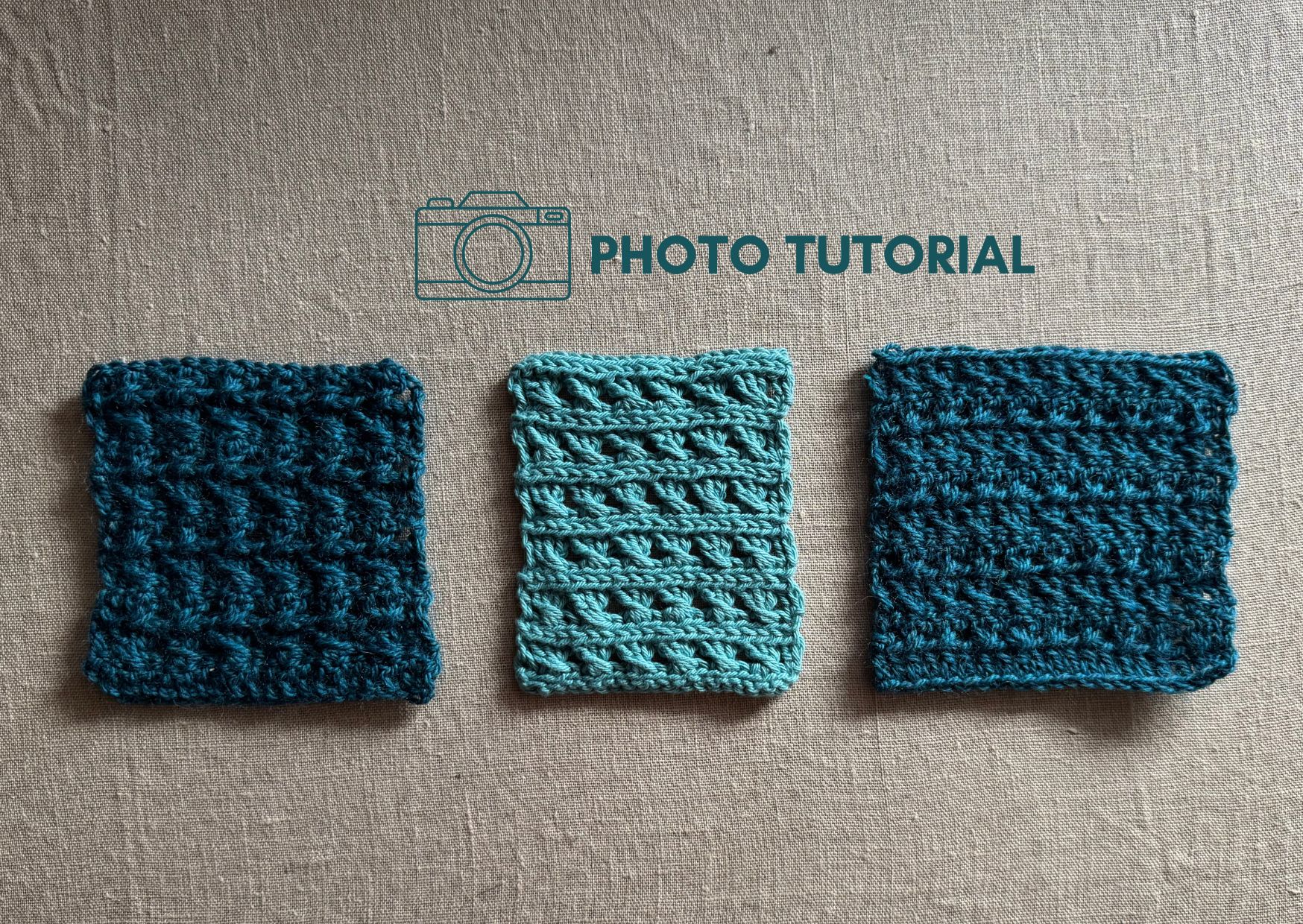
As soon as I saw a crossed crochet stitch, I knew I had to add it into some of my designs.
Crossed stitches use simple treble crochets (US double crochets), but what makes them special is the order in which you make the stitches. By skipping stitches and then coming back to work them, the stitches are twisted and create an interesting texture with a lace effect.
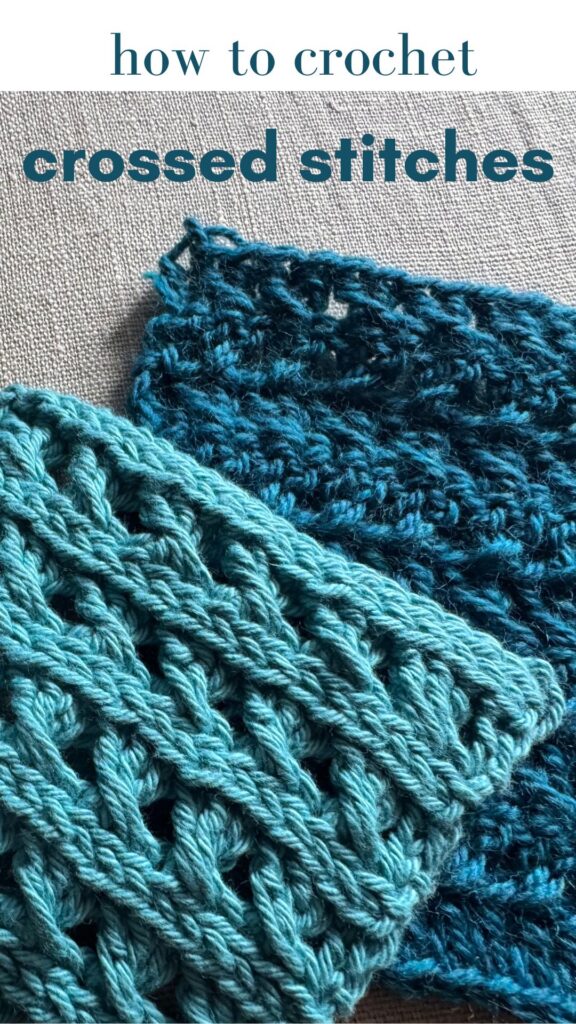
Crossed stitches look great in rows or rounds. A more pronounced cross stitch is created by making the crossed stitch over three trebles (Xtr3). Crocheted over 2 trebles (Xtr2), a slightly more subtle effect is achieved.
To really make the crossed stitches pop you can alternate crossed stitch rows with plainer stitches such as double slip stitch. This highlights all the crossed stitches and keeps them flowing in one direction.
Similarly, if worked in the round, all of the crossed treble stitches will flow in one direction like my Xtr3 & double slip stitch swatch below.

In this tutorial I take you through how to crochet:
- Xtr2 – crossed treble using two trebles (US doubles).
- Xtr3 – crossed treble using three trebles (US doubles). This is my favourite of the two because it really shows off the twisted nature of the combined stitches and gives a waffled, lace effect.
If you would prefer a quick video tutorial, I have one here.
Here’s how make Xtr2, a crossed stitch with two Trebles:
Crossed 2 Treble Stitches can be abbreviated to Xtr2 (US Xdc2).
They require a stitch multiple of 2 but if you are working them in rows, I would suggest adding two more stitches for either side of the row. At the beginning, a starting treble (US starting double) can be added (much neater than turning chains) and 1 treble (US double) is added at the end of the row to finish it off.
This will lead to straight, neat edges to your work (especially if you start the row with a starting treble). I particularly recommend adding these end stitches if you are making a blanket or a garment. The end stitches will create a neat and obvious space to work a border or side seams into.
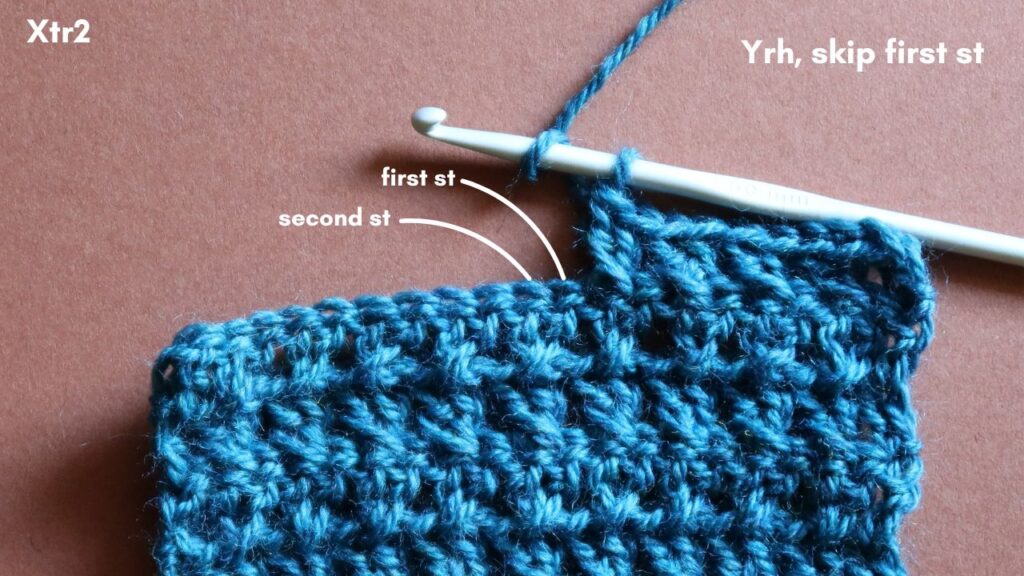
Step 1 – Yarn around hook, skip 1 stitch and identify second stitch that hook will be placed through.
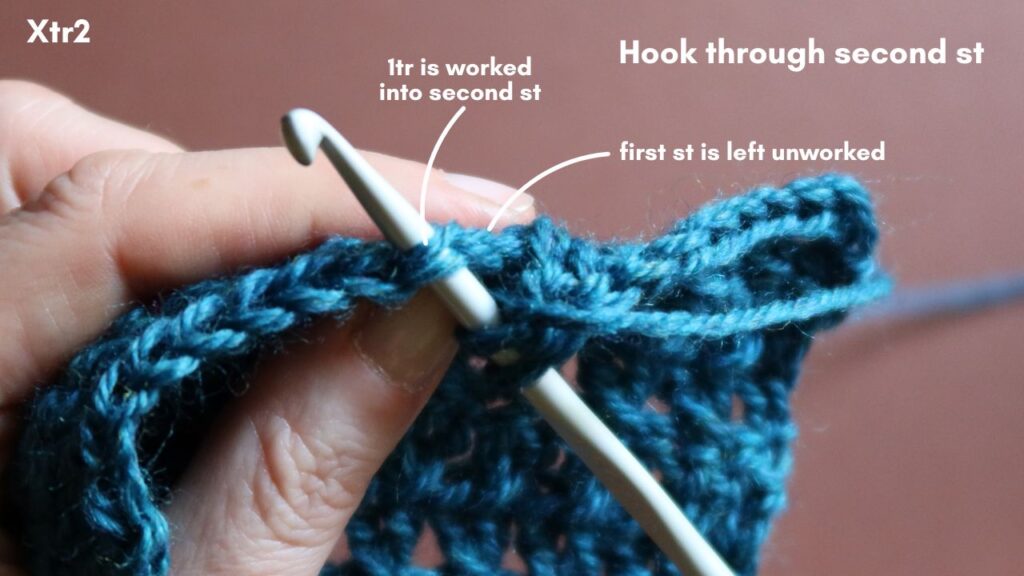
Step 2 – Place hook from front to back, through both loops of second stitch. Continue to make a treble crochet (US double crochet) in this stitch.
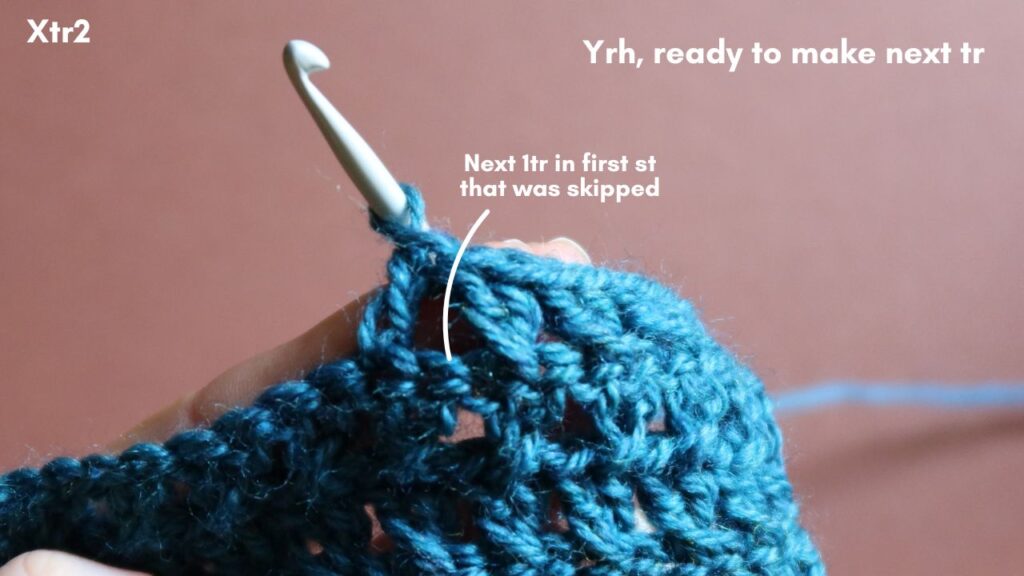
Step 3 – With yarn around hook, place hook from front to back, through both loops of stitch that was originally skipped. Continue to make a treble crochet (US double crochet) in this stitch, pulling the initial loop up a little to extend it and compensate for the slightly longer stitch being made. This second treble crochet crosses over the front of the first treble crochet.
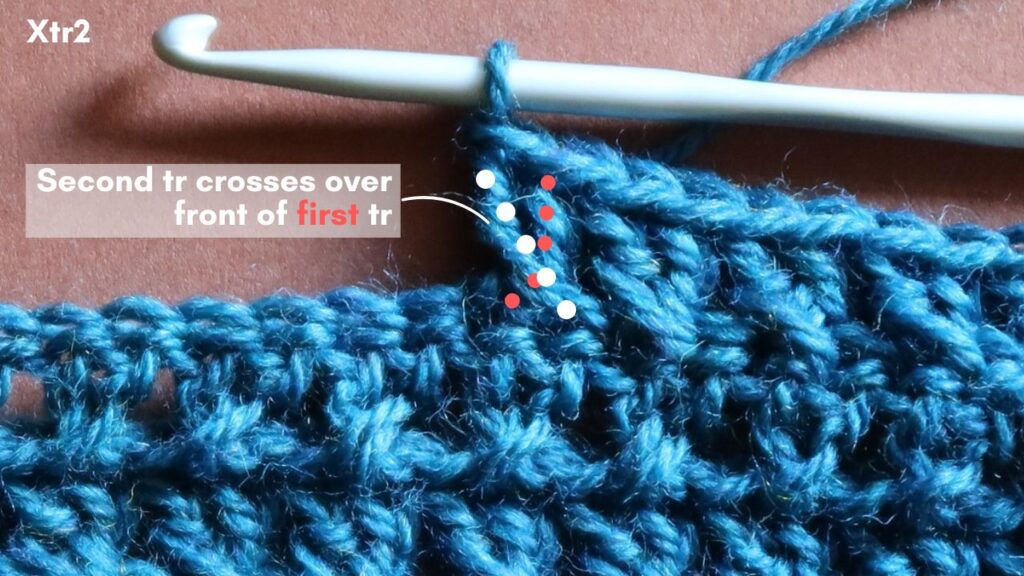
It is well worth looking at the anatomy of the finished stitch. The second treble crochet lies over the top of the first treble crochet. Notice that the stitches at the top are not twisted and are easy to identify and work into in the next round.
Here’s how make Xtr3, a crossed stitch with three Trebles:
Crossed 3 Treble Stitches can be abbreviated to Xtr3 (US Xdc3).
They require a stitch multiple of 3 but if you are working them in rows, I would suggest adding two more stitches for either side of the row. At the beginning, a starting treble (US starting double) can be added (much neater than turning chains) and 1 treble (US double) is added at the end of the row to finish it off.
This will lead to straight, neat edges to your work (especially if you start the row with a starting treble). I particularly recommend adding these end stitches if you are making a blanket or a garment. The end stitches will create a neat and obvious space to work a border or side seams into.
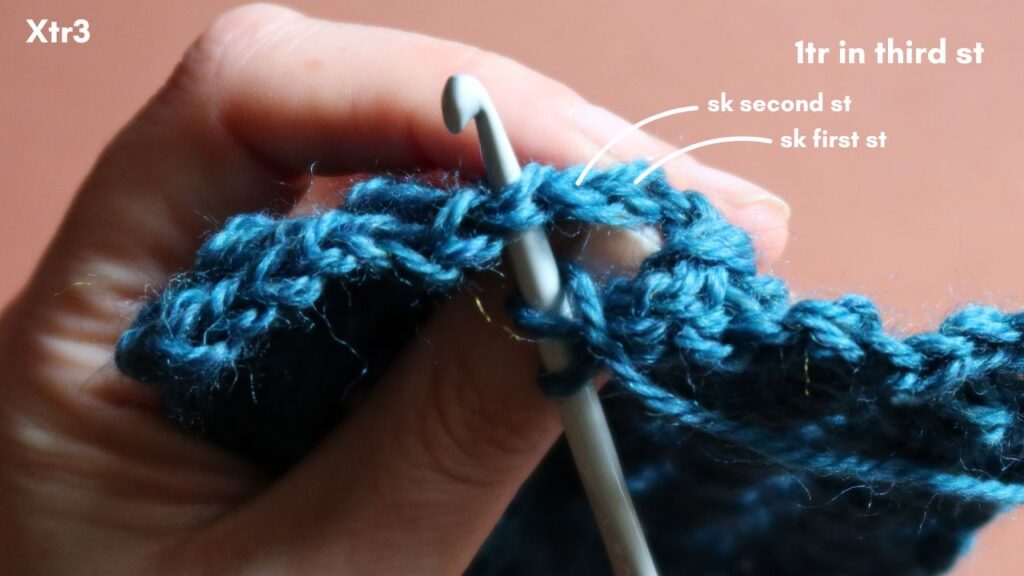
Step 1 – Skip 2 stitches, with yarn around hook, place hook from front to back, through both loops of stitch that was originally skipped. Continue to make a treble crochet (US double crochet) in this stitch, pulling the initial loop up a little to extend it and compensate for the slightly longer stitch being made.
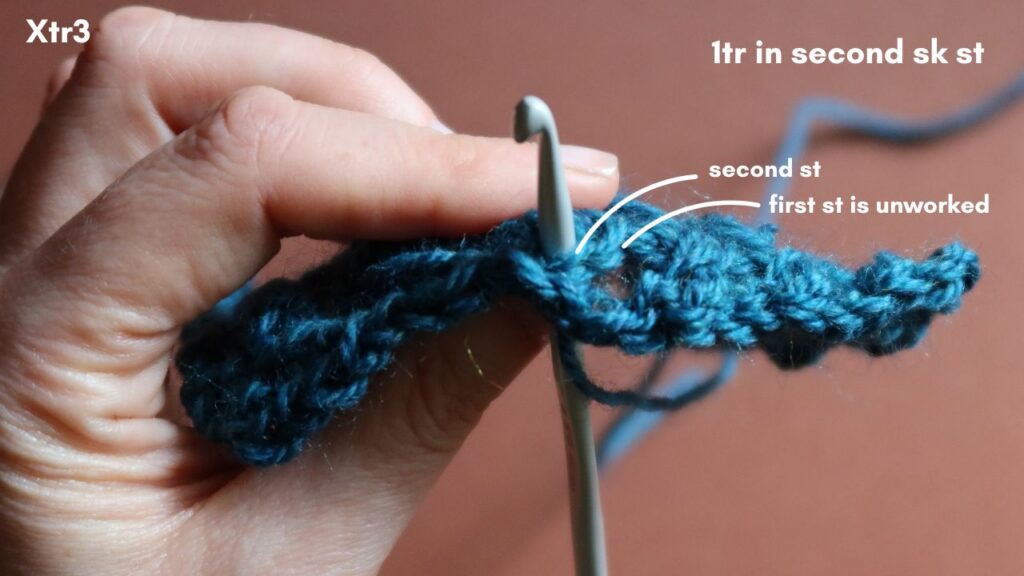
Step 2 – With yarn around hook, place hook from front to back, through both loops of second skipped stitch. Continue to make a treble crochet (US double crochet) in this stitch. This second treble crochet crosses over the front of the first treble crochet made. The first skipped stitch remains unworked at this point.
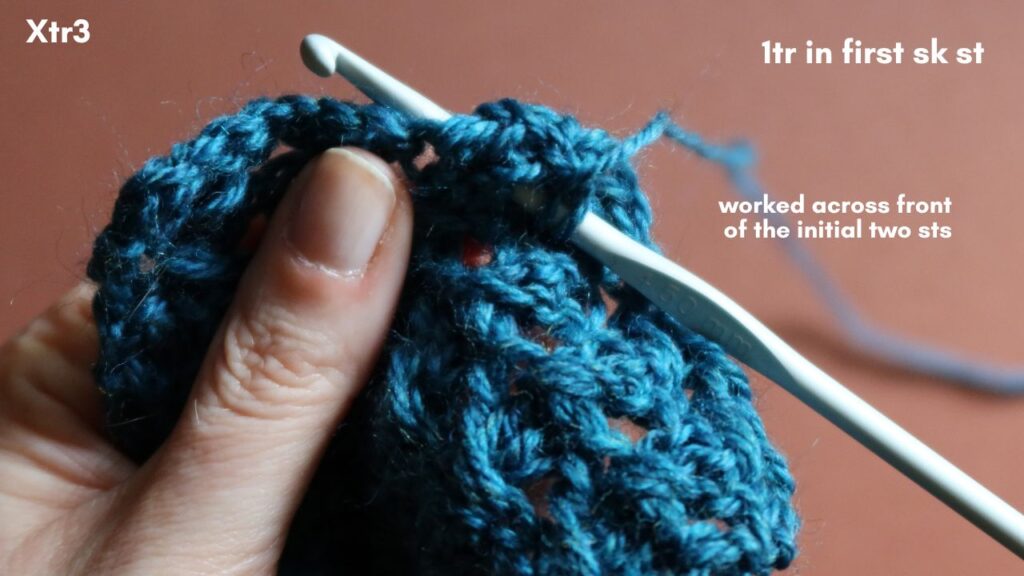
Step 3 – With yarn around hook, place hook from front to back, through both loops of first skipped stitch. Continue to make a treble crochet (US double crochet) in this stitch, pulling the initial loop up a little to extend it and compensate for the slightly longer stitch being made. This third treble crochet crosses over the front of the second and first treble crochets. Three stitches have now been made and no skipped stitches remain unworked.
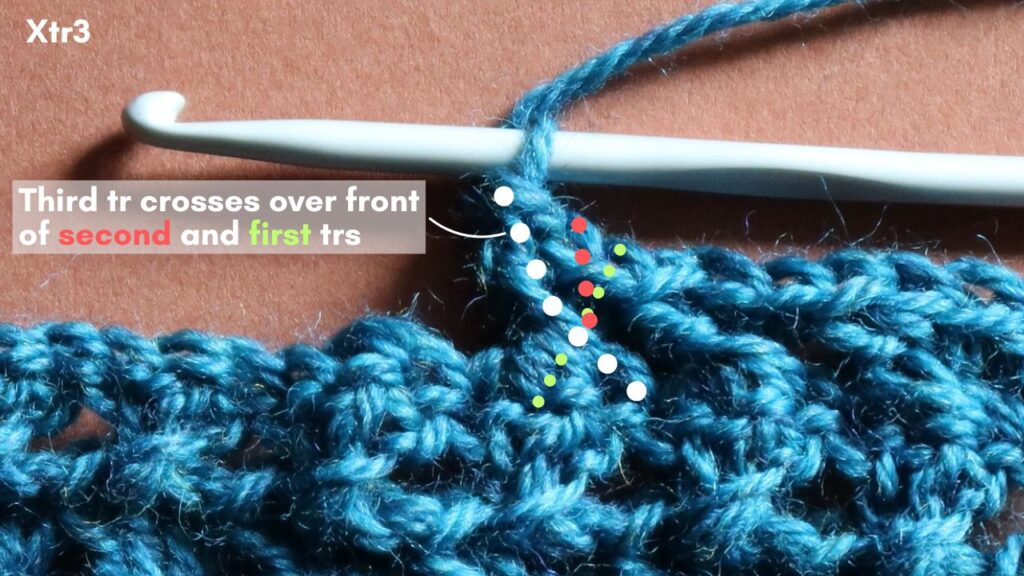
It is well worth looking at the anatomy of the finished stitch. The third treble crochet lies over the top of the second and first treble crochets. Notice that the stitches at the top are not twisted and are easy to identify and work into in the next round.

Prefer a Video Tutorial?
If you would prefer a quick video tutorial, I have one here.
Other Useful Tutorials?
- Treble Crochet (US Double Crochet) is here as a video tutorial, OR here as a photo tutorial.
- Double Slip Stitch is here as a video tutorial, OR here as a photo tutorial.
- Starting Treble Crochet (US Starting Double Crochet) is here as a video tutorial, OR here as a photo tutorial.
Patterns that use Crossed Treble Crochet (US Crossed Double Crochet)

Let’s Be Social
I am usually found in these online places, or you can join my newsletter where I talk about all things yarn, crochet and knitting:
- YouTube crafting podcast and crochet/ knit tutorials– @faydhdesigns
- Pinterest – FayDHDesigns
- Instagram – @faydhdesigns
- Newsletter sign up


