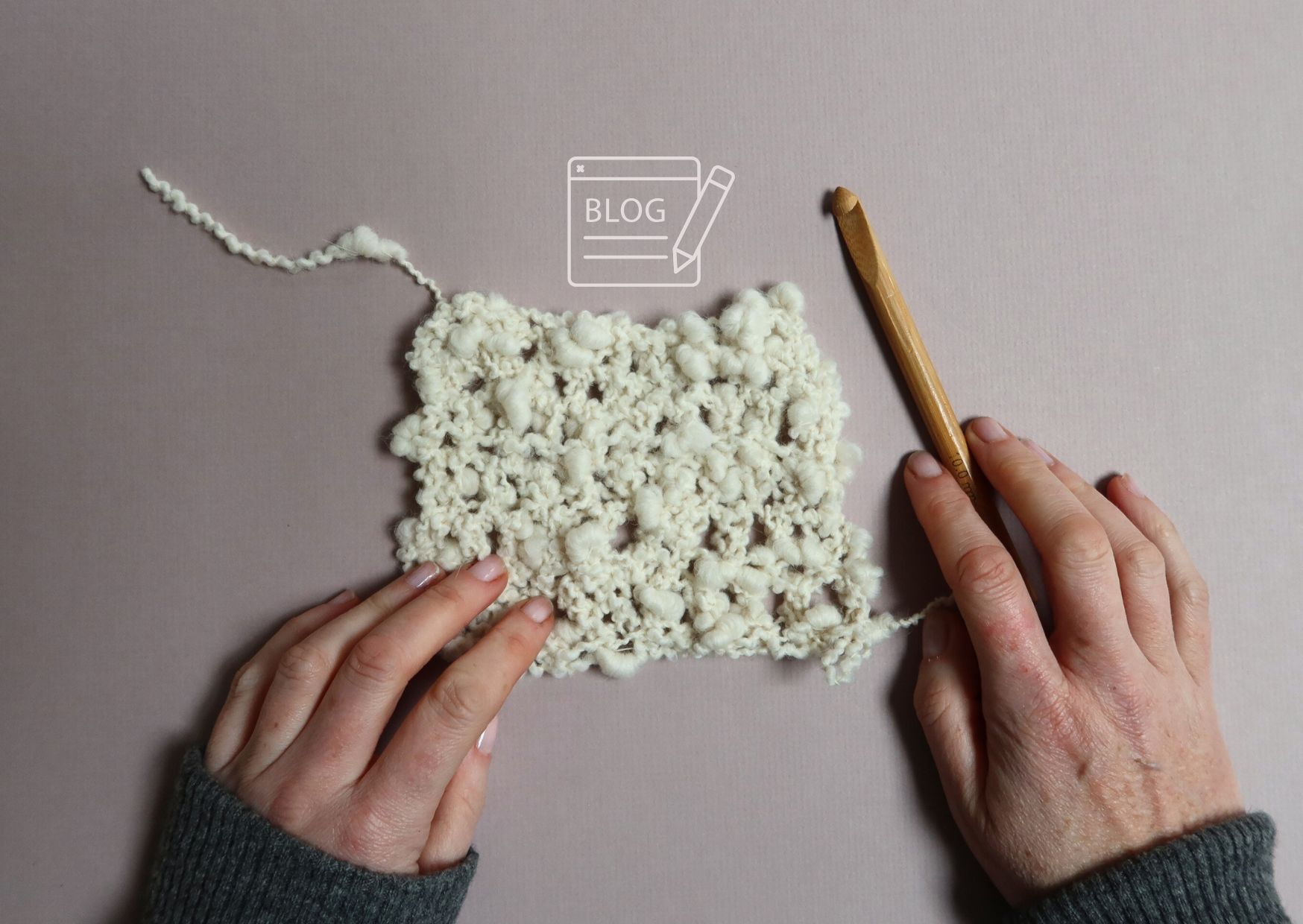
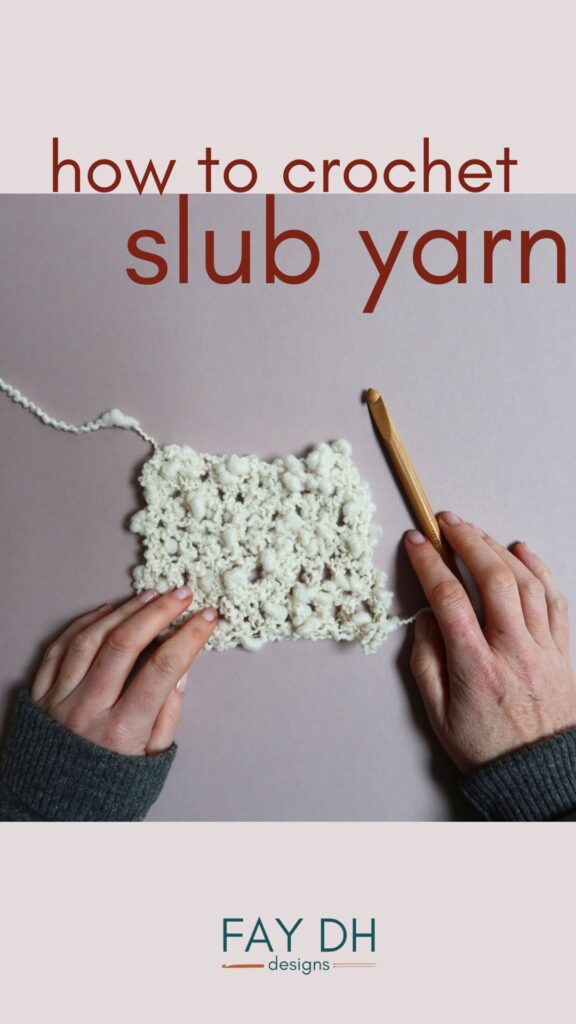
Slub yarn creates interesting textures when worked up in crochet. The resulting fabric can be light weight and drapey with little pops of extra fibre where the slubs appear.
If you haven’t yet crocheted with slub yarn, here are my top tips to get the best results.
This blog post for tips for crocheting with slub yarn covers the following:
This video shows some of the tips such as frogging back and weaving in ends.
1 – What is Slub Yarn?
A slub yarn has thick and thin parts within the ply to create an ‘art yarn’ effect.
There is usually one uniform strand that holds the yarn together and is often made from cotton or nylon to bring stability and durability.
The second strand is often roving wool or alpaca that has very little twist in it to help create the thick ‘slubs’ that make slub yarn interesting to work with. This strand can also be made from cotton, bamboo or acrylic.
Slub yarn is different from boucle yarn which has a whole different texture. You can read more about slub and boucle yarns in these posts:

2 – Slub Yarn from Skein to Cake or Ball?
It is easy to use a yarn winder and swift to cake up slub yarn, even jumbo slub yarn.
Just take it slowly so that the large slubs aren’t rushed through the metal loops. If you need to stop and gently pull a slub through with your fingers, it doesn’t seem to do the yarn any harm.


I enjoyed balling up the second skein of jumbo slub yarn. It stayed intact and gave me a good feel for how often the big slubs were likely to appear in my fabric.
3 – What Hook Size For Slub Yarn?
For my cream swatch, I used a 10mm hook to show how open and textured crochet can be with jumbo slub yarn. The ball band suggested 6 – 10mm needles.
Many yarn labels suggest knitting needle sizes but not crochet hook sizes. If this is the case for your slub yarn, I suggest initially going up 1 – 2mm from the suggested knitting needle size.
If you want a denser fabric, move down a hook size by 1mm and if you want a more open fabric, move up a hook size and keep on playing until you get a fabric you love.
Try and use a crochet hook with a deep bowl for scooping up the slubby parts of the yarn.
4 – Use Stitch Markers
Working with slub yarn is fun, but trying to count stitches and place your hook in the right place can be a challenge, particularly in the foundation chain!
The best way around this is to place stitch markers at regular intervals. For my project, I place marked every 16th stitch because that was the stitch repeat that I needed for each row.
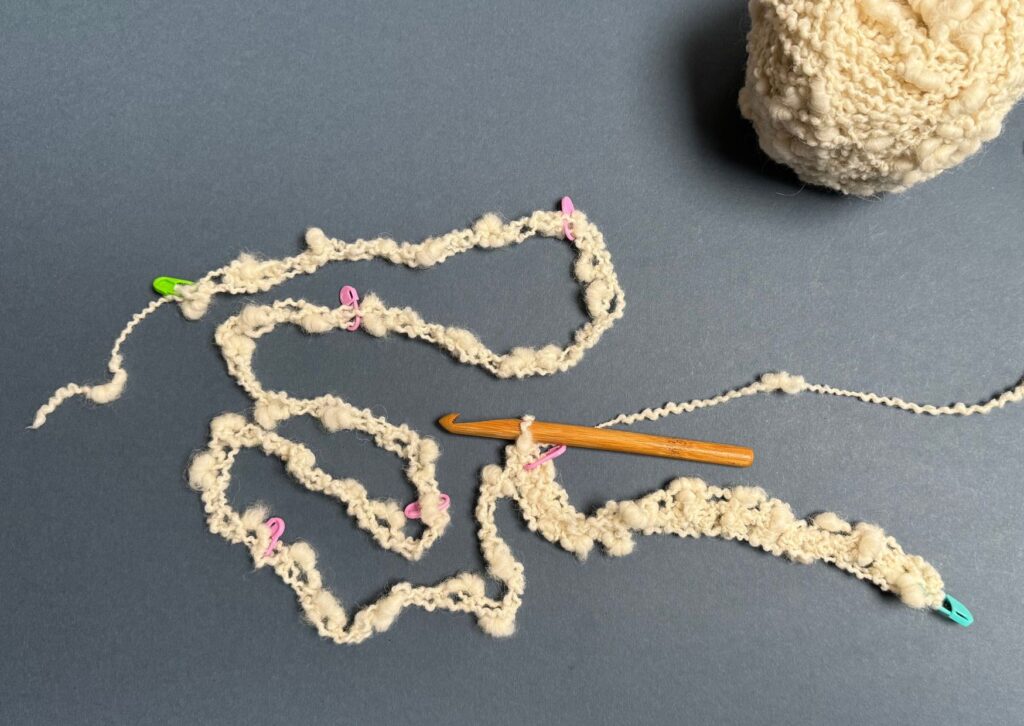
If you don’t use place markers it can be difficult to find stitches where the yarn was particularly thin, with no slubs. Yes it takes time to set up and move the markers, but it is still less time than the otherwise inevitable frogging and starting again.
5 – Use Simple Crochet Stitches for Slub Yarn
This is one of the most important tips for crocheting with slub yarn. Keep It Simple!
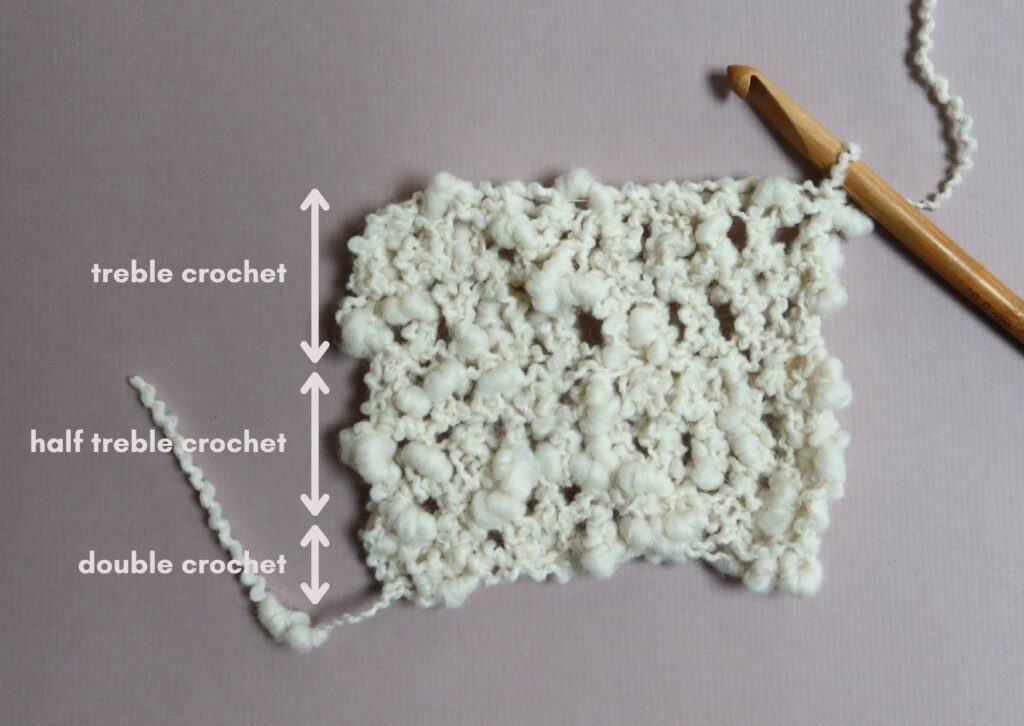
The yarn is busy, especially if it is also variegated. Complex stitches will not be seen properly, so it is better to stick to basic stitches like double (single US), half treble (half double US) or treble crochet (double crochet US).
The first image shows 2 rows of each of those basic stitches and you can barely distinguish one row from the other because the yarn is so busy.
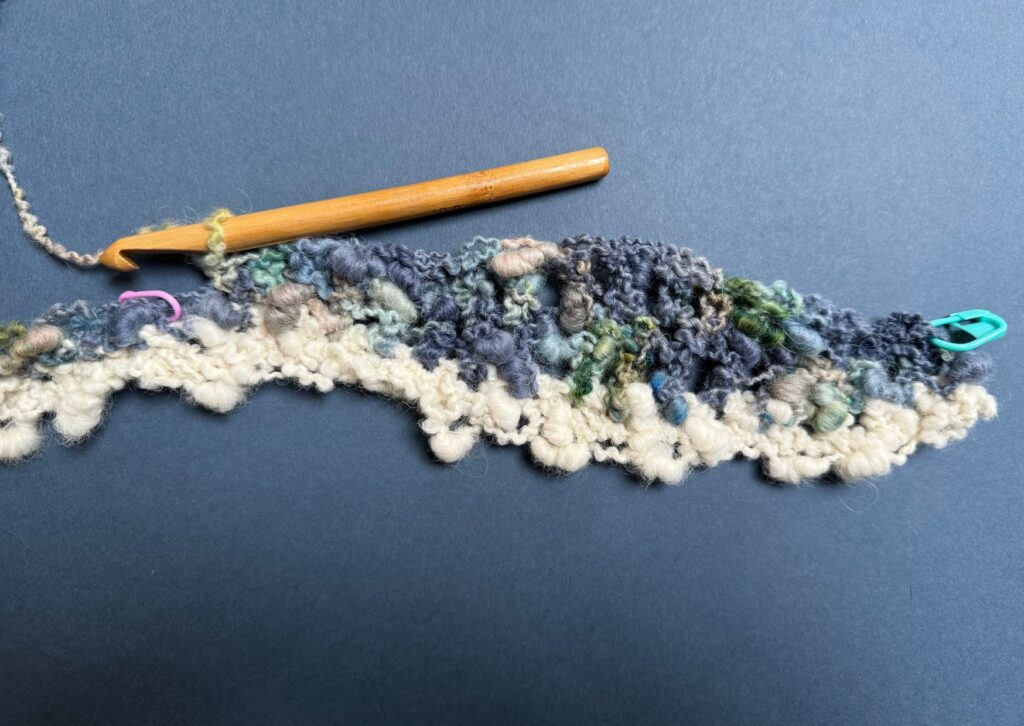
That doesn’t mean you should stick to boring rows of a single stitch, far from it!
The second image shows a design I have been working on which uses double, half treble and treble crochets to create waves as part of a shawl design. The fabric is very textured and lets the yarn do the talking rather than complex stitches.
6 – Ignore The Slubs
It might be tempting to try and change your tension when a slub coming close to your hook, but don’t.
If you are using the right sized hook so that the yarn pulls through the loops easily then the slub should just pop through too. Remember to use a crochet hook with a deep bowl so it easy to scoop the thicker bits of yarn through as they appear.

7 – How to Identify Where the Next Stitch Goes with Slub Yarn
Knowing exactly where the next stitch is can be a little tricky, especially if a stitch is only made up of the thin parts of the yarn.
Apart from using stitch markers to mark regular intervals, there is one more trick I have for you. Yank your hook up a little so that it tugs on the last stitch just made. That will help to identify the last stitch you used and hopefully where the next stitch is.
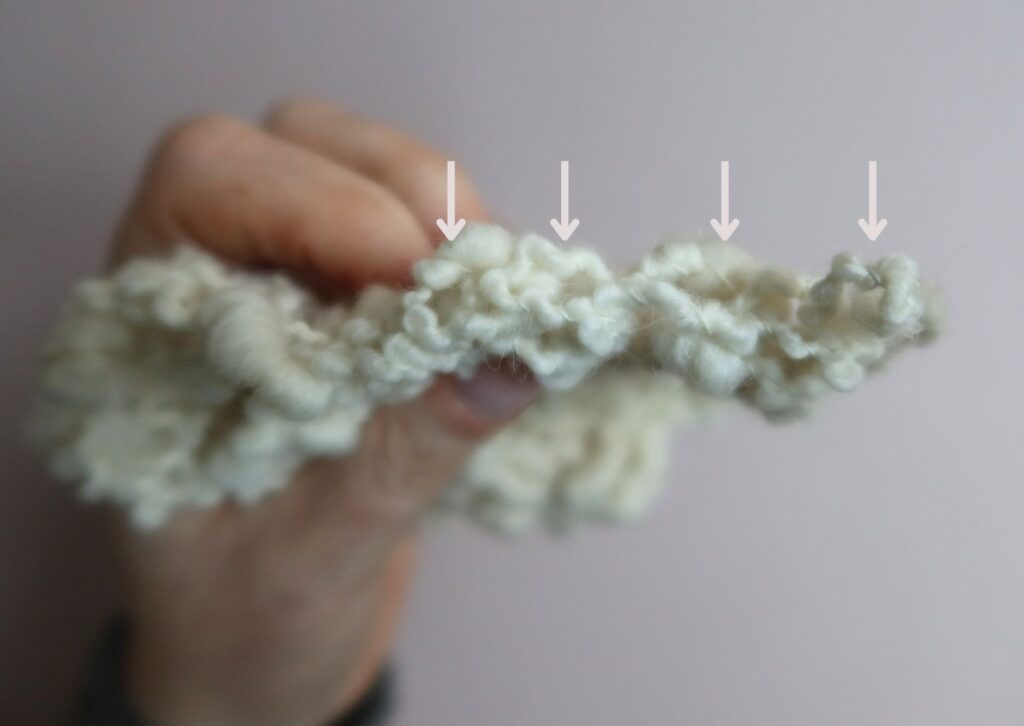
The above image shows where four of the stitches are for my jumbo slub swatch.
8 – Frogging Slub Yarn
You would think that frogging slub yarn would be impossible, but it isn’t! Here is what I found worked:
- Use your non dominant hand to stretch out the row/round that is being frogged. This will open up the stitch gauge and make frogging much easier.
- If a large slub makes frogging difficult, take time to gently pull the slub through with your finger nails. If you have ever untangled a necklace chain, it is that same action that will free the slub from the stitch.
- Don’t pull hard on the yarn. Although most slubs have a strong cotton/nylon ply, it can still be broken easily. Take your time and your crochet fabric should frog.
I repeatedly frogged my jumbo slub swatch and saw no degradation in the look of the fibre, even in the large slubs.
9 – Can you Spit Splice Slub Yarn?
Yes you can spit splice slub yarn, especially if your slub yarn is mainly wool or alpaca. Depending on what you are making though, you may be better of weaving ends in instead.
Whilst the spit splice created a strong join, the texture is very different from the slub yarn and may be obvious in your finished project.

10 – Weaving in Slub Yarn Ends
Slub yarn ends tend to present themselves in three different ways:
- No slub and can just be woven in straight away.
- Slub at the bottom, near the fabric. This slub should be teased out unless you think leaving the slub at the bottom won’t affect your finished project – in which case just weave it in!
- Slub in the middle/ top of your yarn tail. This slub has to be teased out to make sewing in the yarn tail possible.


To tease the slub and reduce its density, gently pull it along the yarn tail. Use the hand closest to the fabric to keep tension on all plies. The hand closet to the cut yarn end is used to gently pull the slub along the yarn.
You may feel a point when it ‘pops’. This is either the slub coming loose (which is what you want), or it’s the cotton/ nylon thread breaking (which isn’t ideal).


Cut the yarn where the thin cotton/nylon ply ends, so that your final yarn tail is made up of the two plies of yarn.
Weave in the end. You don’t need to be precise with this because slub yarn is so busy, the woven ends are not seen. They do need to be secure though.
11 – Look after Your Hands & Nails
If the slubs in your yarn are particularly fibrous they might catch on rough bits of nail or skin on your fingers.
Even though I thought my nails were smooth, I snagged two finger nails while pulling together the swatches for this and the boucle yarn post.
Try to keep your nails trimmed and hands well moisturised when you are working with slub and boucle yarns.
12 – Where to buy Slub Yarn
The yarn used for this post is Jumbo Slub (100g/ 80m/ 87yds) hand dyed from Mamie & Florrie. Amy also has a 4ply slub yarn (100g/ 400m/ 437yds).
Other suppliers I found on the internet were:
- King Cole Opium which which as a cotton and acrylic blend.
- Bamboo Bloom Handpaints by Universal Yarn which is a blend of wool, rayon (from bamboo) and acrylic.
Slub yarn can also be searched for on Etsy and eBay by using terms like ‘Thick and Thin Yarn’, Think ‘n’ Thin Yarn , ‘Art Yarn’ or ‘Fancy Yarn’.
These search terms for slub yarn can return beautiful hand spun skeins for sale or now discontinued yarns from Rowan’s old Thick ‘n’ Thin range and also some lovely vintage finds.
I often see vintage slub yarns in my local charity shops too.
Want More Crochet Tip & Tricks?
Of course you do! I would start with these blog posts:
- How to Crochet With Boucle Yarn
- My Best Crochet Tips I Wish I Knew 10 Years Ago
- Crochet Stitch Anatomy – understand the stitches you are creating and how they differ in rows and rounds.
Let’s Be Social
I am usually found in these online places, or you can join my newsletter where I talk about all things yarn, crochet and knitting:
- YouTube crafting podcast and crochet/ knit tutorials– @faydhdesigns
- Pinterest – FayDHDesigns
- Instagram – @faydhdesigns
- Newsletter sign up


