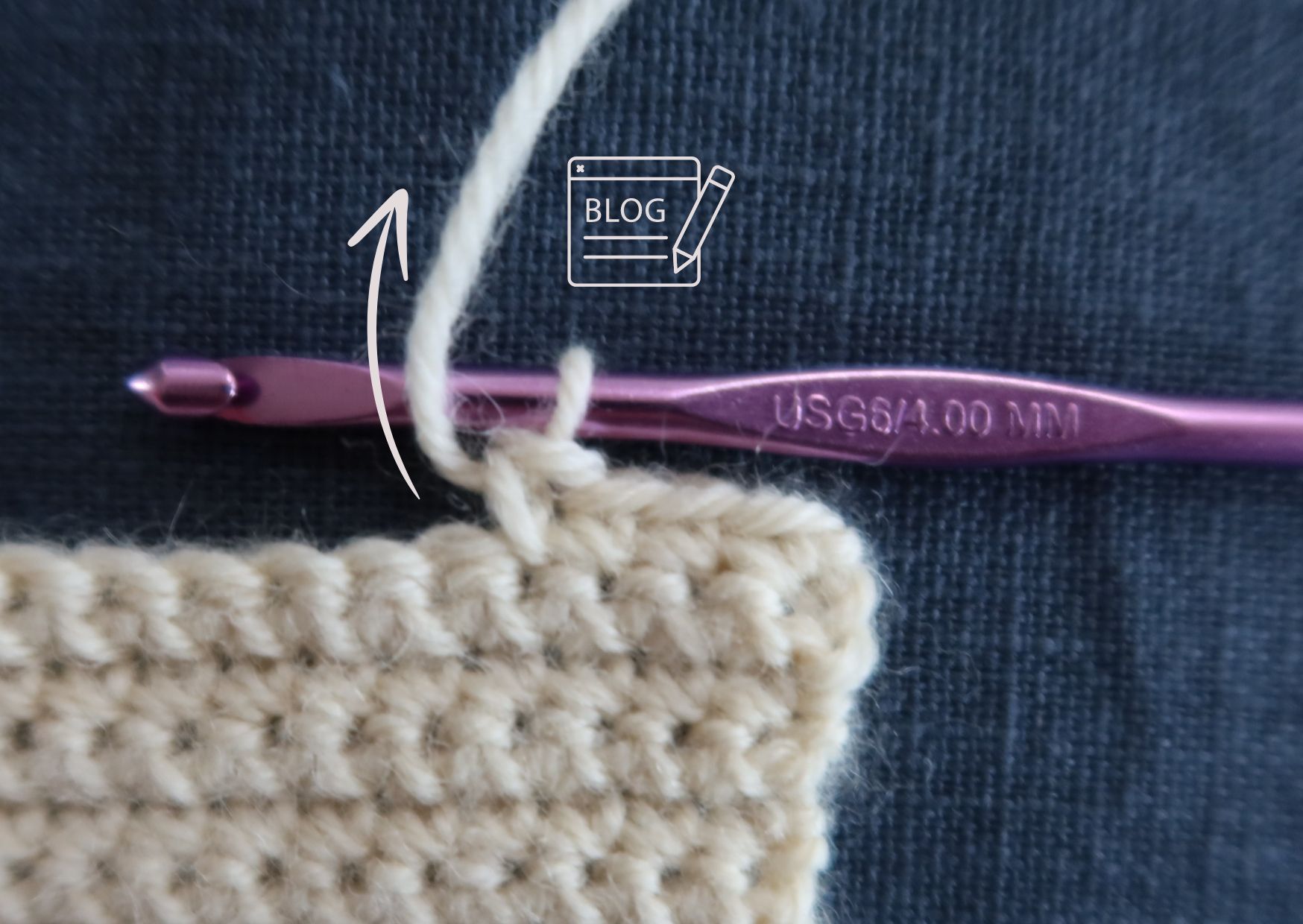
“Does it matter what way I wrap the yarn around my hook?” I asked this question at the very beginning of my crochet love affair and the answer that came back was “no”. <<< This answer was incorrect!
Over the years I have learned that it’s best to test received ‘crochet wisdom’ for myself. So, if you were to ask me the same question, my response would be
“yes, it absolutely does and in so many ways!
To tackle a big topic like this for crochet, I like to dig deep, be methodical (you can read my methodology here) and come out with numerical and visual results.
I have concentrated on the three standard stitches of double (single in US), half treble (half double in US) and treble crochet (double in US), but have no doubt that yarn under has a tension/gauge affect on every single type of stitch you could possibly crochet.
Whether in rows or in the round, the more yarn unders/overs a stitch requires, the bigger the visual difference.
Yarn usage is also consistently reduced across all three stitches. Both the stitches and row/ round heights are smaller with yarn unders and this leads to an average yarn usage reduction of about 11%, compared to the same swatch with yarn overs.
How to Yarn Under
If you have always crocheted using the yarn over technique, this will feel counterintuitive until you get the hang of it. No matter which stitch your are crocheting, the set up is the same. The yarn is always brought underneath the hook (either from the back to the front, or from the front to the back) – hence yarn under.

Double crochet – both yarn unders will be coming from the back to the front of your work and always underneath the hook.
Half treble crochets – the first yarn under comes from the back to the front. The second takes the yarn from the front to the back, underneath the hook. The third, brings the yarn from the back to the front, underneath the hook.
Treble crochets – the first yarn under comes from the back to the front. The second takes the yarn from the front to the back, underneath the hook. The third and fourth, both bring the yarn from the back to the front, underneath the hook.
How to Yarn Over
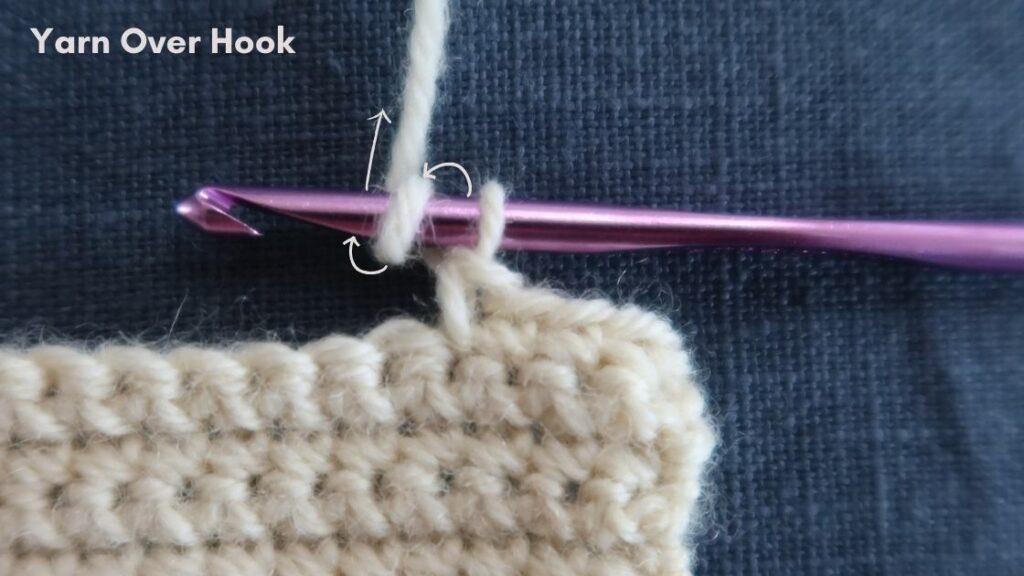
For a visual reference, this is how you yarn over. The yarn comes from the back of your work, over the top of the hook (yarn over) to the back again. This uses an almost full crochet hook circumference of yarn for every yarn over. This is why yarn over crochet is stretchier and uses more yarn.
Double Crochet (single in US)
Whether worked in rounds or rows, double crochet (dc) had consistently tighter gauge when yarn unders were used, rather than yarn overs. The yarn under doesn’t travel as far because it isn’t going all the way around the circumference of the hook as it does with a yarn over. This is particularly obvious on the final yarn under of a dc where the yarn barely travels at all.
Less yarn used to make a stitch will naturally lead to a tighter stitch and row/round gauge, but what does that mean for a project? Although the dc stitches are smaller, they actually look identical whether worked with yarn overs or unders.
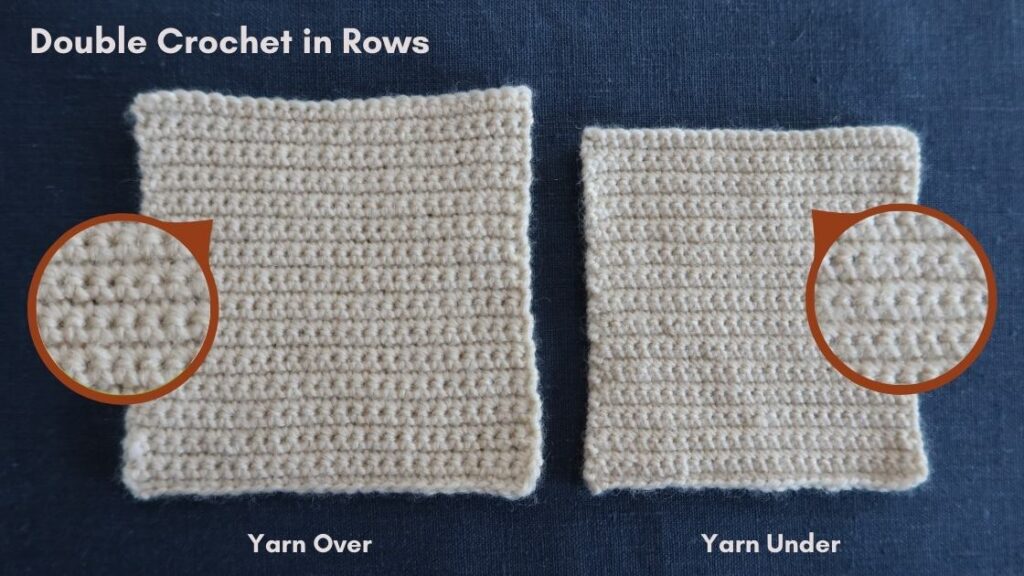
If you were crocheting something like amigurumi where the final size didn’t matter, then actively crocheting with yarn unders will create a denser fabric that suits amigurumi better.
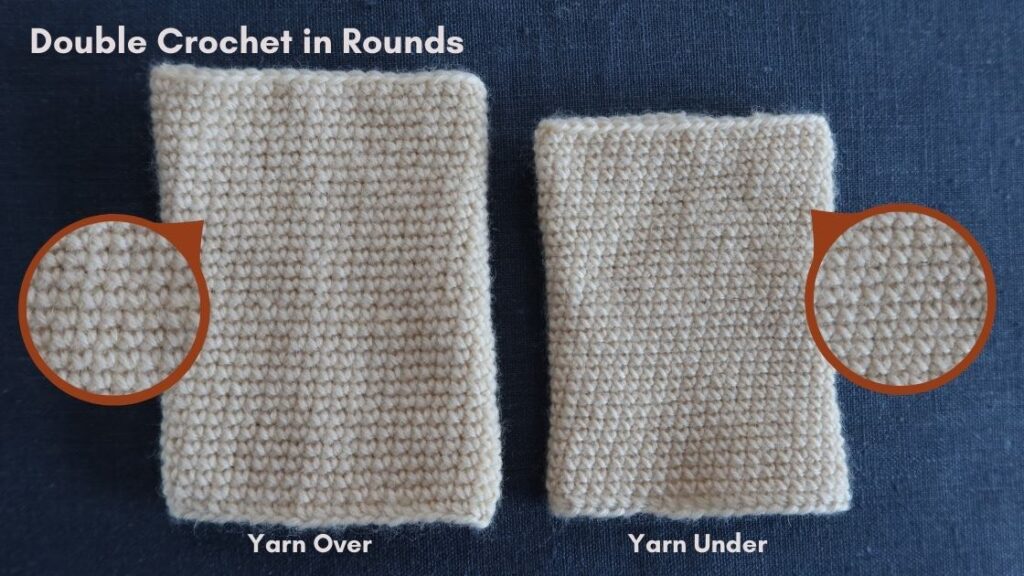
However, if you are working on a dc garment using yarn unders instead of yarn overs, you would likely need to play around with gauge or try larger hook sizes to at least get stitch gauge.
| Double Crochet Rows & Rounds Yarn Over | Double Crochet Rows & Rounds Yarn Under |
| Larger stitches – width and height | Smaller stitches – width and height |
| Fabric has drape and gaps | Dense fabric with little drape |
| Uses more yarn | Uses less yarn |
| Stitches look identical to yarn over dc, just bigger | Stitches look identical to yarn under dc, just smaller |
| Great for dense projects like amigurumi/ bags/ homewares |
Half Treble Crochet (half double in US)
This is where we start to see some visual changes as well as tighter, denser gauge.
In the round, the half treble crochet (htr) yarn under stitches appear very similar, but the stitch definition is very clear, with nice vertical bars.

| Half Treble Crochet Rounds Yarn Over | Half Treble Crochet Rounds Yarn Under |
| Larger stitches – width and height | Smaller stitches – width and height |
| Fabric has drape and gaps | Fabric is denser but has some drape |
| Uses more yarn | Uses less yarn |
| Stitches are the same | Stitches are the same but just more pronounced because there are no gaps |
| Could be swapped out for yarn over htr where you want a very defined round of stitches |
The row swatches are even more interesting. A feature of yarn over htrs worked in rows are the obvious horizontal bars that are created by the final yarn over on the rear of the stitch as a 3rd loop. When worked in rows, these 3rd loops show on both sides of the fabric on every other row.

| Half Treble Crochet Rows Yarn Over | Half Treble Crochet Rows Yarn Under |
| Larger stitches – width and height | Smaller stitches – width and height |
| Fabric has drape and gaps | Fabric is denser but has good drape |
| Uses more yarn | Uses less yarn |
| Stitches are different | One row of stitches is same as yarn over, but second row stitches look diagonal rather than vertical |
| Vertical line is visible on both sides from 3rd loop | No visible 3rd loop horizontal line making rows less obvious |
The anatomy of a yarn under htr means that the yarn doesn’t pass over the back of the hook on the final yarn round hook, it goes straight to the front of the hook from underneath and so the 3rd loop isn’t created at the rear of the stitch. This creates a much shorter stitch where the row repeats are much less obvious than the yarn over swatch.
Treble Crochet (double in US)
The most apparent differences between all stitches seems to be with treble crochet. The more yarn unders/overs that are required to create a stitch, the more different those stitches look.
Yarn under trebles in the round have the same garter stitch look, accompanied by a vertical bar that creates an affect similar to waffle stitch – it looks completely different to yarn over trebles in the round.
If you turn the fabric inside out though, the swatch looks more like the yarn over treble version, just upside down.
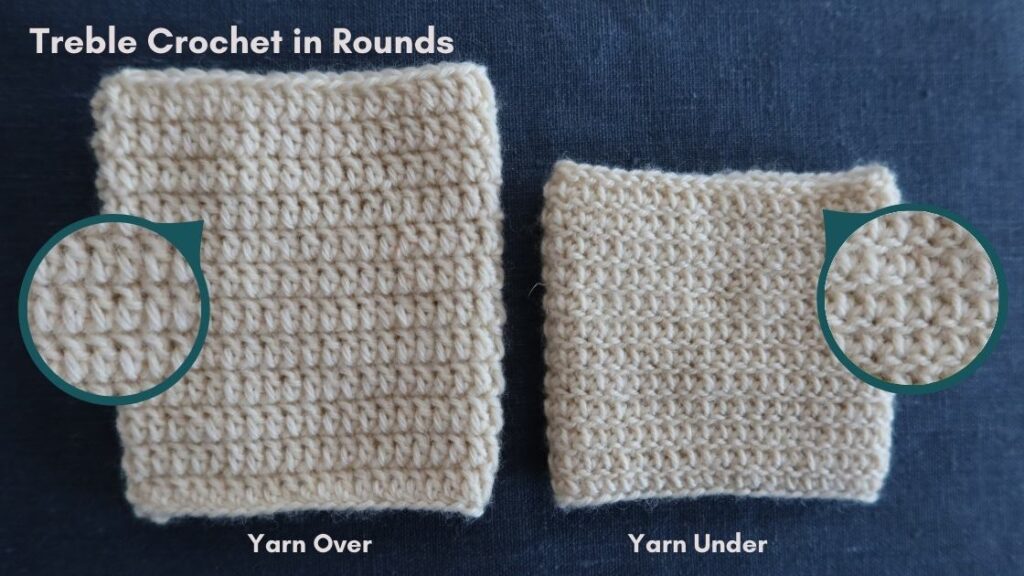
| Treble Crochet Rounds Yarn Over | Treble Crochet Rounds Yarn Under |
| Larger stitches – width and height | Smaller stitches – width and height |
| Fabric has drape and gaps | Fabric is denser but has some drape |
| Uses more yarn | Uses less yarn |
| Stitches are similar at bottom half of stitch and differ at the top | Stitches are similar at bottom half of stitch and differ at the top |
| Rows are very obvious | Rows are not obvious. Yarn unders create a wave of stitches at the top that look like garter stitch. |
A swatch of yarn over trebles in rows presents tall, vertical stitches. Swap to yarn under treble rows and the stitches take on a lean that looks more like Herringbone trebles and because each yarn under shows at the front of the stitch, they create what looks like a row of garter stitch in knitting.
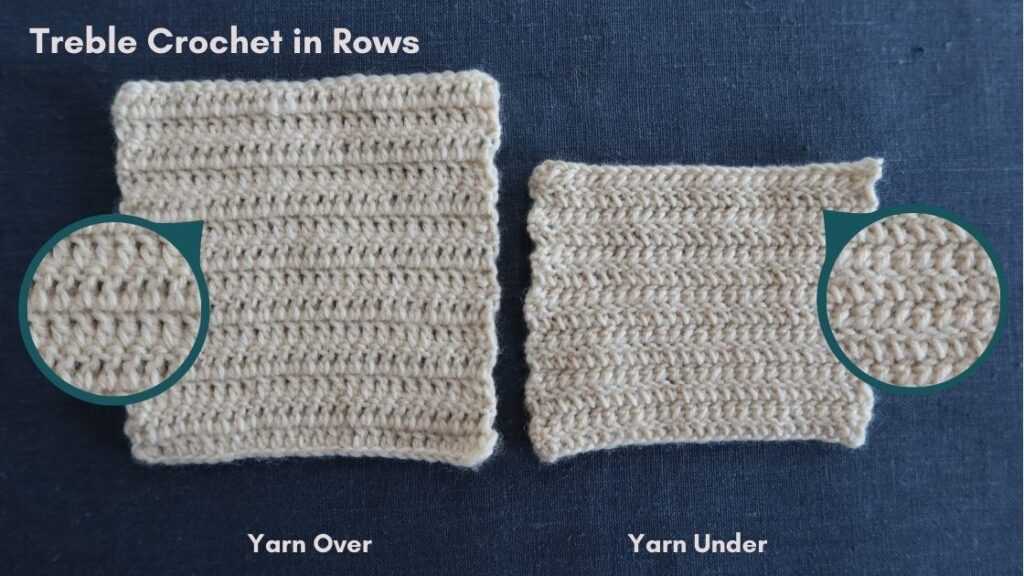
| Treble Crochet Rows Yarn Over | Treble Crochet Rows Yarn Under |
| Larger stitches – width and height | Smaller stitches – width and height |
| Fabric has drape and gaps | Fabric is denser but has good drape |
| Uses more yarn | Uses less yarn |
| Stitches are similar at bottom half of stitch and differ at the top and are vertical | Stitches are similar at bottom half of stitch and differ at the top and are diagonal |
| Vertical row lines are visible on both sides | Rows are less obvious because of diagonal stitches and density |
Top Tips for working yarn unders
- Most designers use yarn overs. Check whether you yarn over, under or do a mixture of the two.
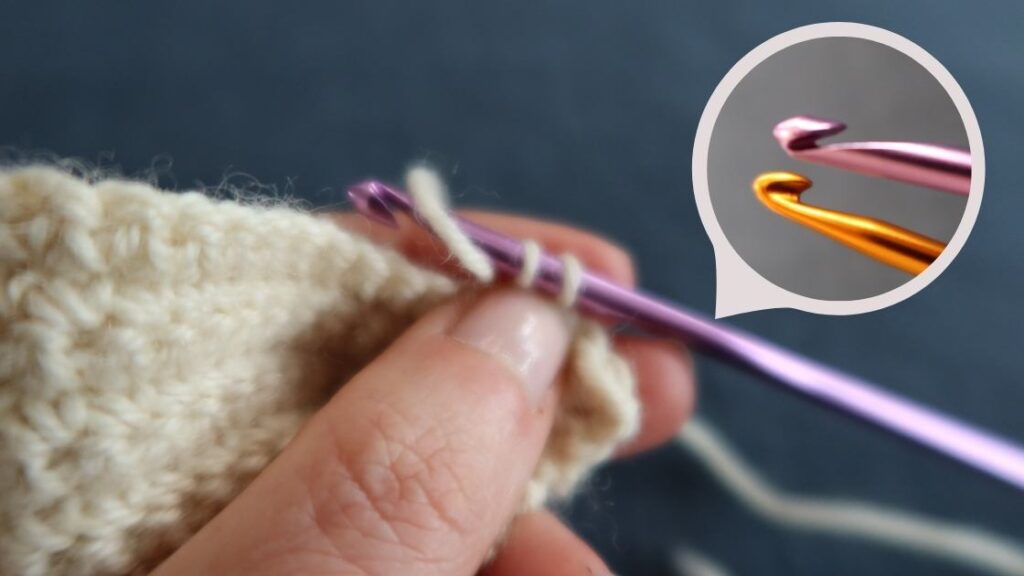
- A deep bowled hook with a decent point helps scoop the yarn under and keep it in place to pull up a loop. I used a Susan Bates hook to speed through all the swatches. See the difference in the image below. The pink hook has a deep bowl and the orange hook does not.
- Yarn under starting chains created a wobbly chain that was substantially tighter and affected the tension of the first couple of rows/rounds. Using a yarn over for starting chains uses more yarn length and will result in better overall tension.
- At first, wrapping yarn under the hook was difficult and split the yarn. Persevere, it will come good.
- Pinching the fabric and stitch loops with non-dominant thumb and index finger when working the stitch helps to keep tension in the loops to manoeuvre the hook through. See image below.
Conclusions
It isn’t wrong to yarn under, it’s just a different way of forming stitches. The Crochet Police won’t come knocking. If you have noticed that your crocheted stitches don’t look like the ones in a pattern, or you consistently struggle get stitch and row/round gauge, check whether you yarn under or yarn over. Knowing this will help you understand stitch anatomy and to understand what a pattern is calling for.
Not everyone sticks to a pattern and many people make patterns up as they go. If this is you, and you normally yarn over, I encourage you to have a play around with yarn unders. They create a denser fabric that could be helpful for all sorts of makes and it’s like adding a whole new range of basic crochet stitches to your repertoire.
In all of the swatches, the yarn under versions kept the twist in the wool better. This is particularly noticeable for taller stitches like htr and tr crochet. If you are using a low twist yarn or a splitty cotton, swapping out to yarn unders might be the solution to keeping the twist in the yarn.
I learned so much from working up these swatches. Rather than defining myself as a yarn under v yarn over crocheter, I am intrigued to see how I can use yarn under crochet stitches in future designs. A bag using yarn under htr crochet would create a dense, durable fabric with amazing stitch definition. It seems that more investigating may be required!

Methodology
- All swatches were made using RiverKnits Nene DK undyed because it has a high twist, perfect for showing off true differences in the stitches.
- Same number of stitches and rows/ rounds were used across the sample swatches.
- Began with yarn over swatch in double crochet rows until half the swatch was made. Moved to yarn under row swatch, back to yarn over to finish, then finished yarn under. All done on the same day to regulate and tension/gauge changes. Same was applied to dc in the round swatches and subsequent row/rnd swatches for htr and tr.
- Final swatch of dcs in rows using yarn under was made as a control to see if there were changes from first dc in rows swatch because I have never used yarn under before. The two swatches have identical tension/ gauge.
Useful?
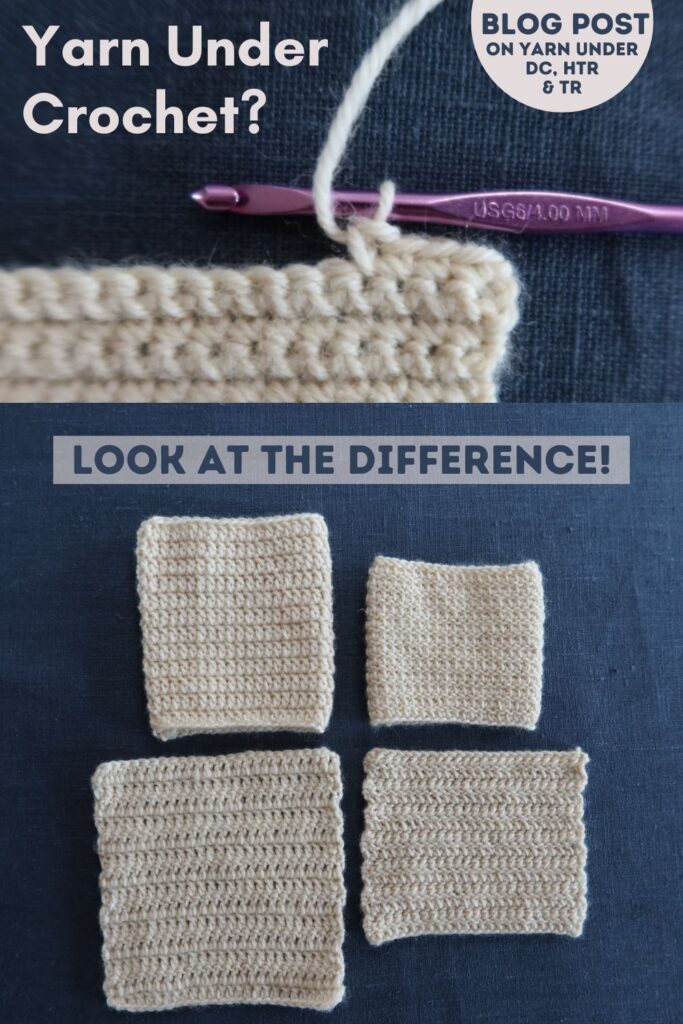
Hopefully you found the photos with graphics a helpful way to see what a difference yarn under makes compare to yarn over crochet?
Now, if you really want push your crochet knowledge a little further, take a look at the post on ‘Crochet Stitch Anatomy‘. In that blog post I show you how to identify double, half treble and treble crochet stitches in rows and rounds. <<< It’s very useful information to know!
Let’s Be Social
I am usually found in these online places, or you can join my newsletter where I talk about all things yarn, crochet and knitting:
- YouTube crafting podcast and crochet/ knit tutorials– @faydhdesigns
- Pinterest – FayDHDesigns
- Instagram – @faydhdesigns
- Newsletter sign up


