
Lots of knitters and crocheters avoid working with dark coloured yarns – think black, charcoal, navy and dark brown. This is a real shame because these colours are staples in most people’s wardrobes!
Why don’t people craft with dark yarns?
It seems obvious to point out, but dark yarns are dark! Stitches, rounds and rows are much harder to count, the darkness swallows up the detail of the fabric, making every stitch harder to make and keep track of.
The good news is, my lovely crafting community and I have created a set of quick pointers for you, using many things that you probably already own.
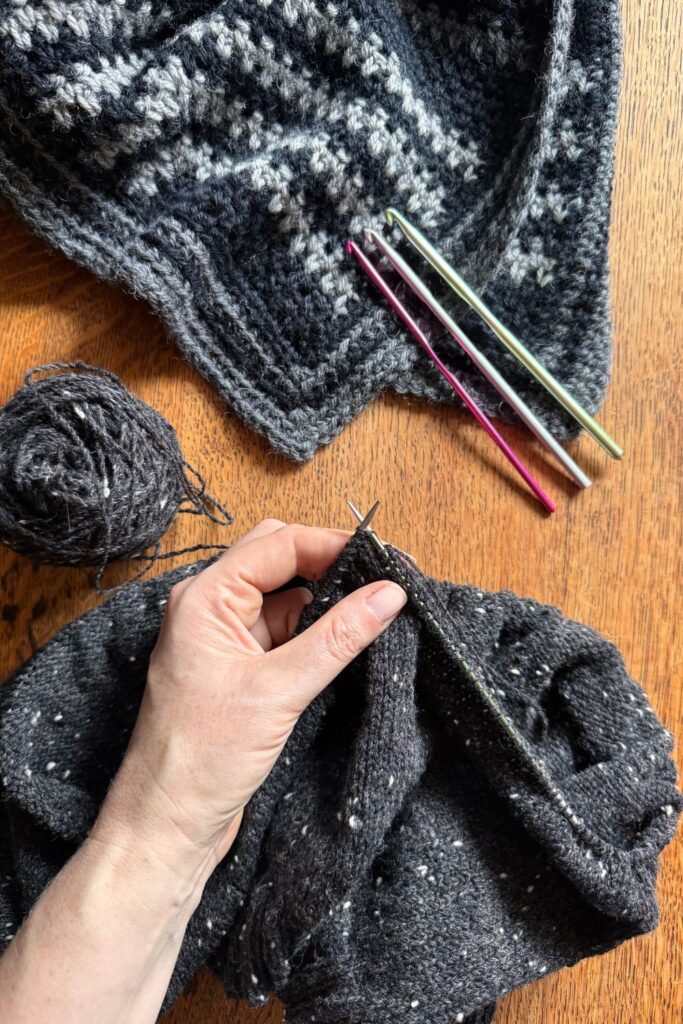
How to Knit And Crochet With Dark Coloured Yarns
Use High Colour Contrast Knitting Needles and Crochet Hooks
This is one of the most helpful tips when starting to work with darker colours of yarn. If your hooks or needles are also dark coloured, it makes it very difficult to see if you have worked into the stitch properly, split your yarn, or even created a proper stitch.
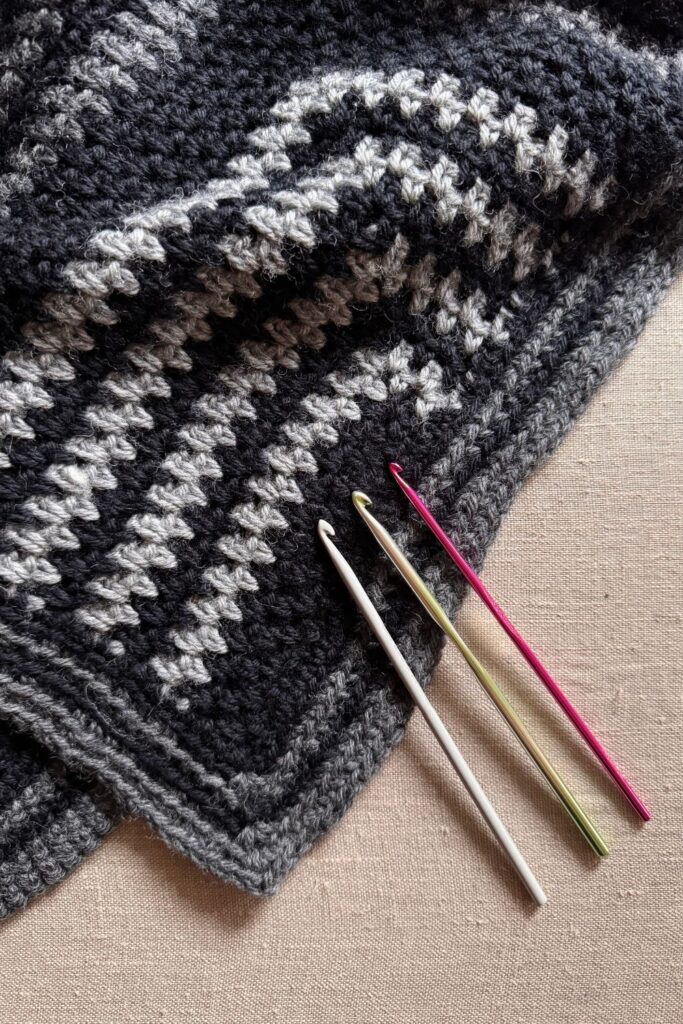
For crochet, it’s really easy to find affordable hooks that are either silver or a bright colour. I love using bright pink hooks against dark yarns because the colour contrast is very high.
For knitting, swapping out from wooden to metal needles usually creates enough colour contrast. You can see in the image below that my Knitpro blue wooden needles are much lower contrast than my Knitpro Zing needles with the silver tip.
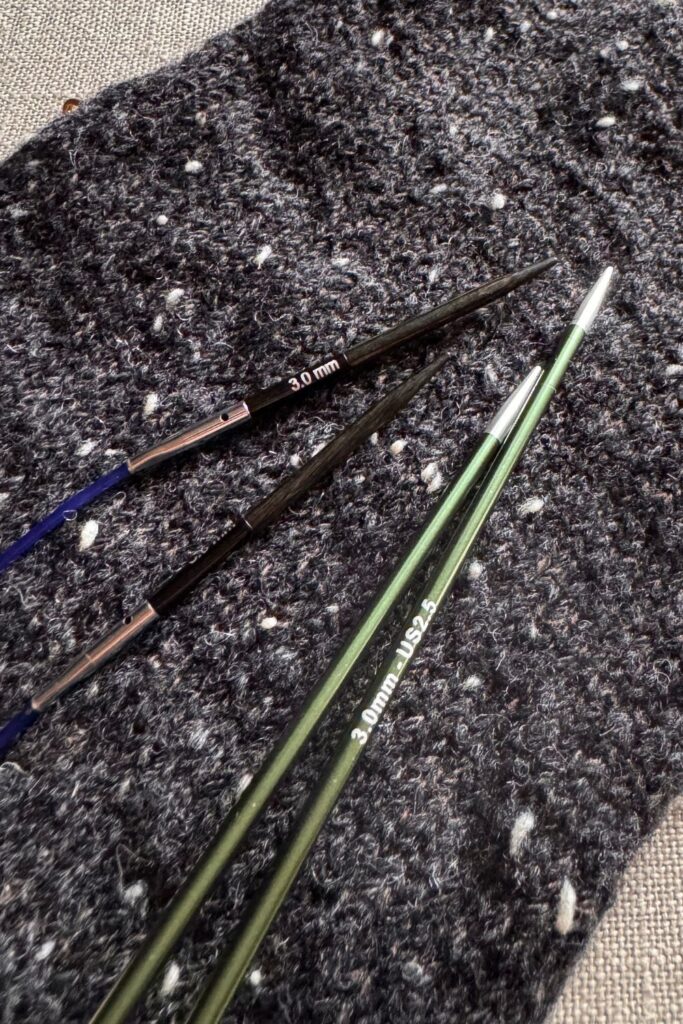
I started this knitting project with wooden needles and through sheer frustration of not seeing the stitches properly, I put it to one side until I could buy some silver tipped needles.
Good Lighting is Essential
Daylight is always going to be the best time to craft with dark yarns, but that may not always be possible.
So, if you are crafting in the evening, try adding a daylight bulb to the light that is closest to your crafting space. The quality of the light from a daylight bulb feels much more natural and can reduce eye strain.
I don’t really like having the ‘big light’ on in our living room and I rely heavily on a neck reading light as soon as natural light starts to fade.
Having gone through a few of these lights over the years, this type is BY FAR my preferred option over the double ended laser type neck lights and here’s why:
- The elongated light bar offers a better area of light that is slightly diffused rather than creating bright spots on my crafting project.
- There are three lighting mode options depending on which light colour you prefer.
- The lighting bar rotates, so you can get a very direct light source on your work without lighting up the rest of the room.
- It is flexible and can be made into a standing light that can be useful when you are doing things that need to be done at a table.
- It recharges very quickly and the light can be switched on and worn whilst being charged <<< this isn’t always the case!
- The flexible pieces are much better quality in this light and show no sign of wear and tear, even after four years of use. The double-ended ones I have tried previously became limp and unusable in a short period of time.
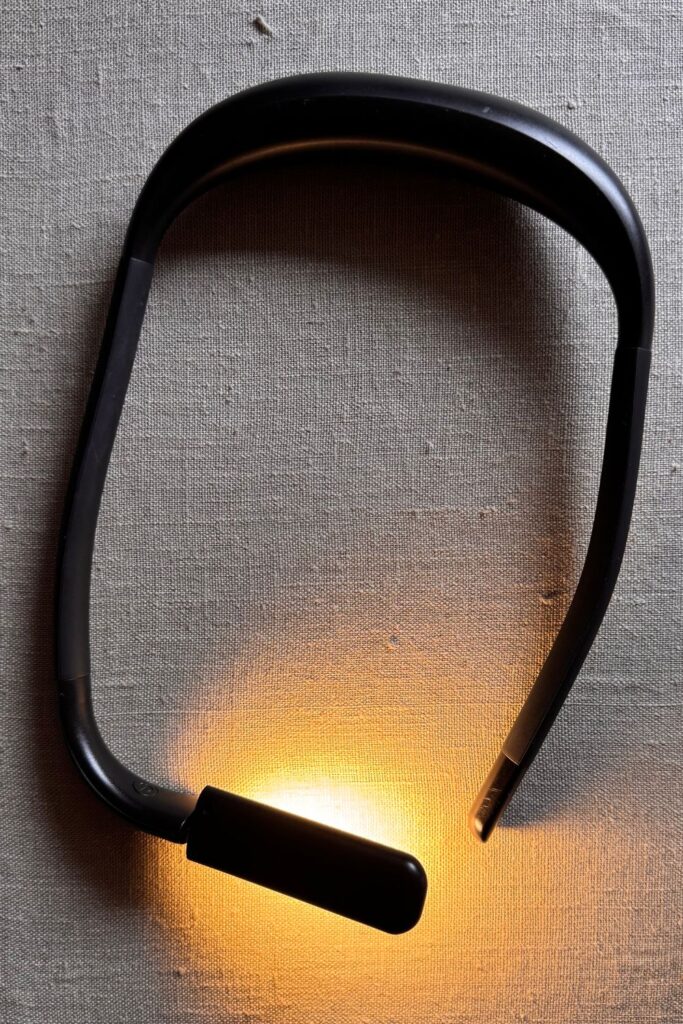
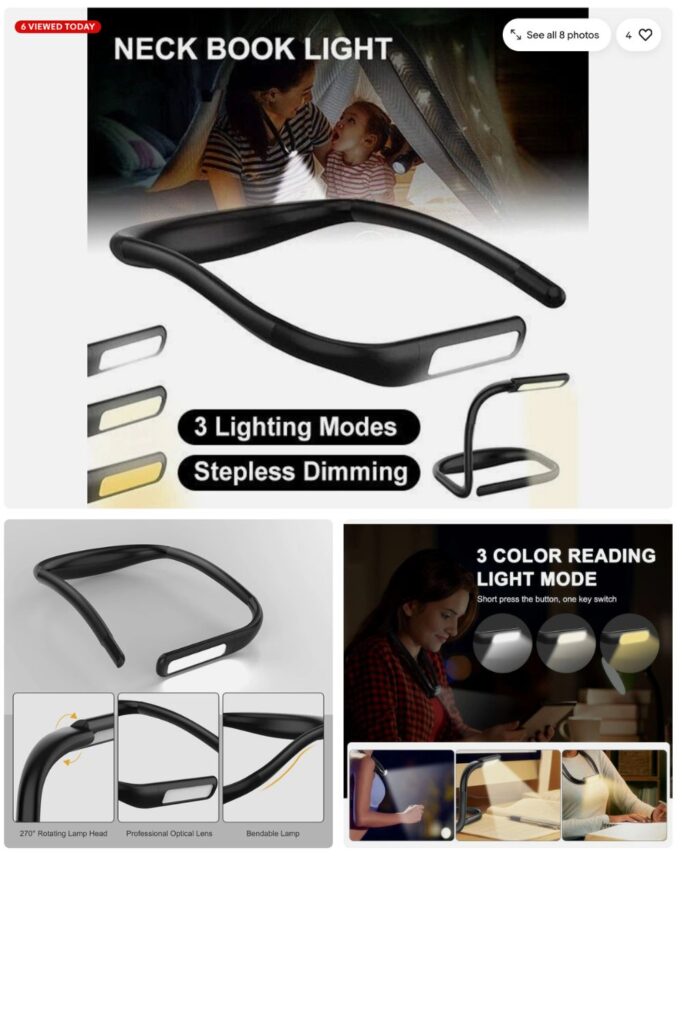
There are many manufacturers for these kinds of lights. I bought mine from eBay, but an internet search for “LED Neck Reading Light Flexible USB Rechargeable Book Bed Night Lamp Hands Free” will bring you the same/ similar light wherever you are in the world.
White Towel
Having a light-coloured piece of fabric like a pillowcase or towel on your lap is a great way of adding another point of colour contrast to your crafting area.

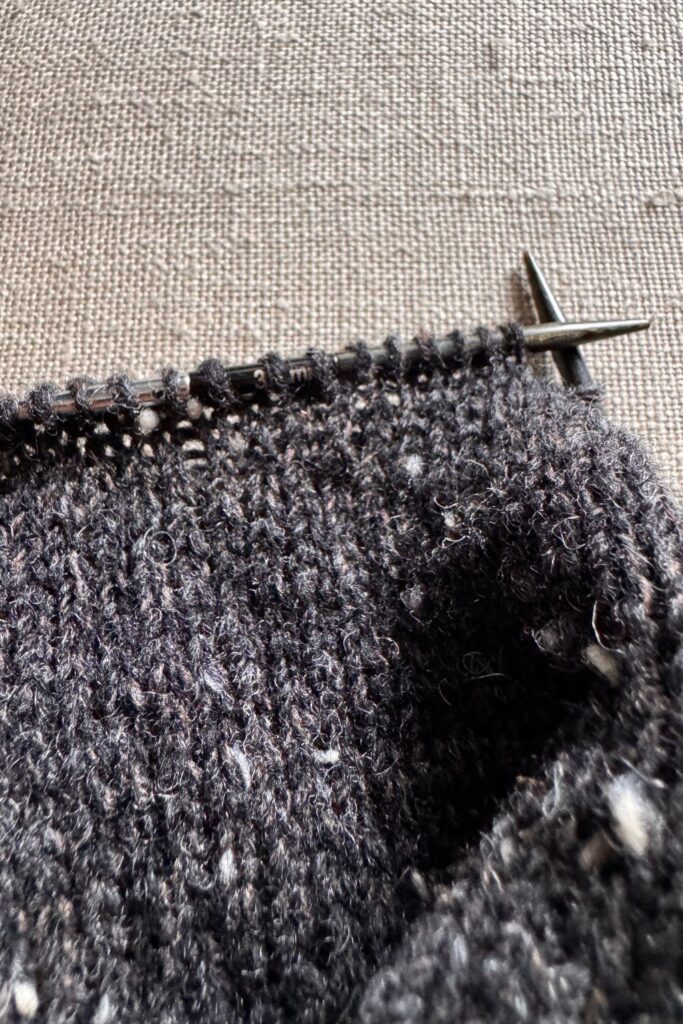
This is particularly helpful when you are counting stitches or making sure that your hook or needle is going into the right stitch. The white background against the dark yarn fabric is a simple thing to do that works well.
Stitch Markers, Row Counters & Progress Keepers
Using colourful stitch markers for pattern repeats or beginning of round markers is helpful. They bring a little bit of colour joy and dopamine to a dark project and make counting stitches easier.
In the image below, you can see that I am using lots of bulb pins to mark off every decrease. I am also using a counter to make sure that I decrease evenly. This has made knitting the sleeves of this dark jumper much easier and saved me a lot of round counting.
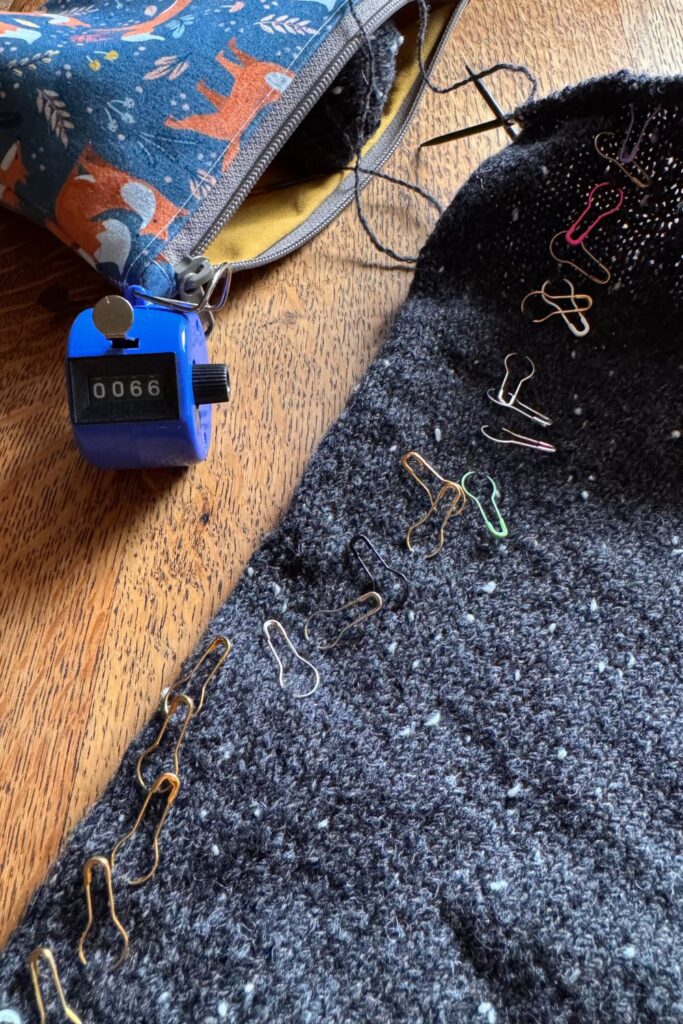
Crocheting and knitting dark coloured projects can feel like it is taking forever. I have found that using a progress keeper during each crafting session on a dark coloured project can help keep me engaged. I can see that progress is being made and that I am now just crafting the abyss.
Add A Lifeline
If you want a really failsafe approach to knitting with dark yarns, add a lifeline every 10 rounds/ rows or at the end of a pattern repeat.
This is going to be particularly helpful if you are knitting lace or cable repeats which are infinitely harder to knit in dark yarn colours.
Any More Dark Yarn Tips?
If you think I have missed any tips for knitting and crocheting with dark coloured yarns, let me know.


Let’s Be Social
I am usually found in these online places, or you can join my newsletter where I talk about all things yarn, crochet and knitting:
- YouTube crafting podcast and crochet/ knit tutorials– @faydhdesigns
- Pinterest – FayDHDesigns
- Instagram – @faydhdesigns
- Newsletter sign up


